
How Many Hours Is Too Many on a Used Sea-Doo? (The Real Answer)
By Matt Elliott · Pro Jetski · 2026
It’s the first thing most people check when looking at a used Sea-Doo: how many hours. They see “180 hours” and walk away, or “60 hours” and get excited. The problem is that hours alone never tell you the full story.
I’ve seen 300-hour skis come through the workshop in better condition than 30-hour skis. I’ve also seen 50-hour skis that were already a mess. After 25 years working on these machines, the hour meter is one of the last things I look at — and here’s why.
The short answer: there is no magic number. A well-serviced Sea-Doo with 300 hours is a better buy than a neglected one with 80. What matters is how those hours were accumulated and how the ski was maintained along the way.
This is about the used market sweet spot — Sea-Doos roughly three to fifteen years old, typically somewhere between 50 and 400 hours. If you’re looking at something nearly new, low hours is exactly what you’d expect and isn’t worth worrying over. This is for the buyer weighing up an older ski where the hour number starts doing more talking than it should. Also just for a bit of perspective. I have worked with many commercial operations throughout my career and have Sea-Doos with over 3,500 hours before we pulled apart the engine for a freshen up.
Why Hours Alone Don’t Tell You Much
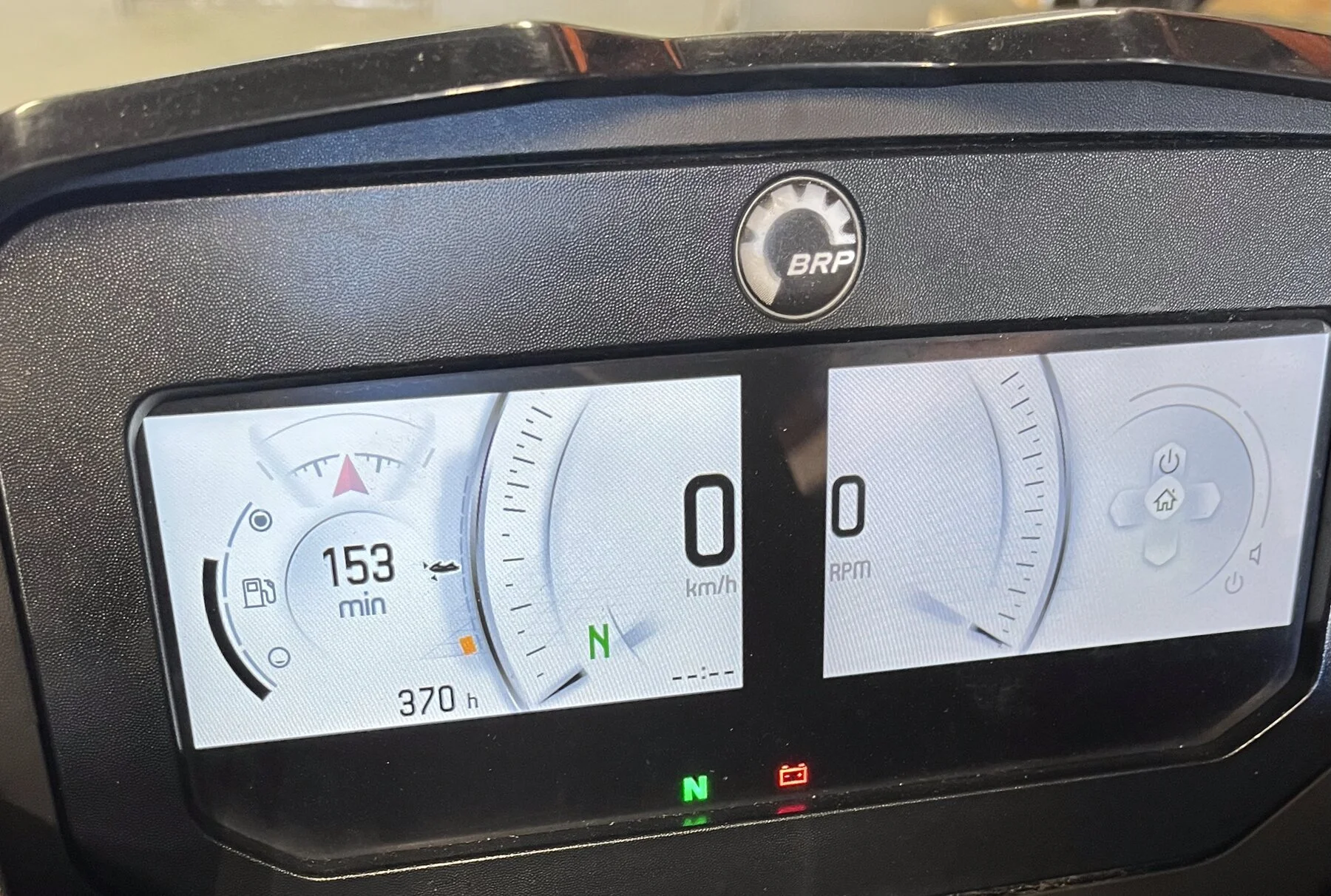
The meter only runs when the engine is running. It doesn’t record how hard the engine was worked, what water conditions it operated in, how long it sat between rides with old fuel in the system, or whether it was serviced on time — or at all.
Two skis, both showing 100 hours, can be in completely different condition depending on how those hours were used:
100 hours of gentle family riding, serviced every season — virtually no wear
100 hours of hard salt water riding, missed services, never flushed properly — potentially significant internal wear
The hour meter captures time, not treatment. And treatment is everything.
What Hours Actually Mean — By Engine Type
If you want a rough framework, here it is. But the caveats below the table matter more than the numbers.
Naturally aspirated 4-TEC (GTI 130, GTI 170, GTX 170) — under 150 hrs is “low.” Genuinely long-lived if maintained — favoured by rental fleets worldwide. A well-serviced 300-hour GTI 155 is not a gamble. Service history matters more than the number.
Supercharged 4-TEC (RXP-X, RXT-X, GTX, GTR 230/300/325) — under 100 hrs is “low.” The supercharger changes the calculation — more power and more parts means it needs better maintenance and fuel discipline.
Sea-Doo Spark (Spark 2-up, Spark 3-up) — under 100 hrs is “low.” Lighter construction, smaller engine — harder worked per hour but generally takes the punishment. Limited engine bay access on early Sparks makes owner-side cleaning harder, which is where issues tend to start.
Supercharged Models: The 100-Hour Myth
On 230, 300 and 325hp supercharged models, the supercharger has a scheduled inspection at 200-hour intervals, as per the service manual. It’s an inspection, not a rebuild — and has been since 2012. Always ask specifically about supercharger service history, separate from general annual service history. Don’t take “it’s been serviced” as confirmation the SC inspection was actually done.
Normal Use — and When Low Hours Is a Red Flag
For context, most owners here put on somewhere between 30 and 50 hours a year. A ski showing 20 hours after three years of ownership isn’t a bonus — it’s a red flag. That’s not gently used, that’s parked. A ski that’s sat with salt exposure and barely run is often harder to bring back to full health than one that’s been ridden and serviced consistently, because corrosion and perished seals don’t care whether the engine was turning over.
What Actually Wears Out
Whether a ski is high or low hours, the engine itself is rarely the problem if it’s been serviced on schedule. It’s everything else that wears out first: electronics, battery, cables, the jet unit, footmats, and cosmetic panels. Worth checking these regardless of the number on the dash — they’re often what actually needs replacing, not the motor.
1. Service History — Not Just “It’s Been Serviced”
Ask for the actual receipts, not just the seller’s word. You want to see annual servicing at or before each 12-month mark, spark plugs and oil changed on schedule, and the jet unit removed and inspected. A proper service record shows the work performed, hours, and dates — not just a line item for oil and a filter. An oil and filter change on its own is routine maintenance, not a full service.
It’s common for a ski to come through the workshop for a service just before it’s listed for sale — it lets the seller advertise “fully serviced.” That’s fine, but check whether any repairs were advised during that service and whether they were actually completed. A service and a repair are two separate things. Fresh oil, filter and plugs doesn’t mean every flagged item was fixed.
A ski with no paperwork isn’t automatically a bad ski — plenty of owners service their own. But if there’s no paperwork, you’re taking the seller’s word for it, and the price should reflect that risk.
2. Salt Water vs Fresh Water History
Salt water adds wear everywhere the water touches — cooling passages scale up over time, impeller and pump components wear faster, and hull fittings and fixtures are under constant attack. This matters more in coastal markets, where most used skis have a salt water history.
A salt water ski isn’t a deal-breaker, but it needs to have been looked after: flushed after every ride, regular impeller inspection, cooling system maintenance. A salt water ski that was never flushed and rarely serviced is years ahead of a fresh water ski in wear terms — regardless of what the hour meter says.
3. Storage and Usage Patterns
How a ski was stored matters as much as how it was ridden. A ski that sat for two years with old fuel in the system, a flat battery, and no pre-storage flush has problems that hours won’t reveal. Ethanol fuel sitting in the system degrades, attracts moisture, and damages fuel system components. Ask how long it’s been since it was last regularly ridden — not just the total hours.
It shows up outside the engine too. Sun-faded decals, cracked seats, and heat-damaged panels and footmats are common on skis left sitting out in the weather, even when the hour count is low. A ski stored under cover, started and flushed regularly, tells a very different story to one left out in the sun.
The Question to Ask Instead
Instead of “how many hours does it have?”, ask this: “Can you show me the full service history, and when was it last serviced?”
That question tells you far more. A seller who can answer it confidently, with paperwork to back it up, is a seller worth dealing with. A seller who gets vague or defensive is telling you something with that reaction too.
Hours are a starting point for a price conversation — not a proxy for condition. A 200-hour ski with full history and good maintenance habits is worth more than a 60-hour ski with none of those things. The market doesn’t always reflect that, which means there are genuinely good deals in higher-hour skis that buyers walk away from because of the number.
There’s a resale angle to this too. Buying the cheaper ski because it has fifty extra hours on the clock can look like a saving today — but you’re adding your own hours on top of theirs. A 60-hour ski that becomes 160 hours by the time you sell is an easier sell than a 130-hour ski that becomes 230. Low hours now can cost you more at the other end.
One thing I’ve seen consistently over 25 years: the skis that cause the most grief aren’t the high-hour ones. They’re the low-hour skis that sat unused for long periods, or the ones where the owner did the minimum and moved them on before the problems surfaced.
Buy the service history, not the hour meter.
Quick Answers
Is a low-hour Sea-Doo always the safer buy?
No. A low-hour ski that’s sat unused for long stretches can have more problems than a well-used, well-maintained one — degraded fuel, dried seals, and corrosion that had time to set in. Usage pattern and service history matter more than the number on the clock.
How many hours is too many on a Sea-Doo?
There’s no fixed number. Naturally aspirated 4-TEC engines routinely run past 300 hours with no issues when serviced on schedule. Supercharged models need closer attention past 100 hours, mainly around the supercharger’s 200-hour inspection interval. Condition and service history tell you more than hours alone.
Do more hours mean more engine wear?
Not necessarily. A regularly serviced engine wears predictably and is usually fine at higher hours. Components like cooling passages, the impeller, electronics and cables wear on their own timeline, largely independent of engine hours — which is exactly why a standard service checks them regardless of what the meter says, not just the engine itself.
What should I check instead of just the hour meter?
Full service history with dates and receipts, whether the ski’s been run in salt or fresh water, and how it’s been stored between rides. Those three things tell you more about real condition than the number on the dash.
Going Further: The Pre-Purchase Inspection
Everything above is about reading the number correctly. It won’t tell you whether a specific ski is sound — that takes an actual inspection.
The full pre-purchase process covers what the hour meter can’t: hull condition, impeller and compression checks, electrical and DESS key checks, a fault code scan, and a proper water test. That’s the subject of the next guide: How to Buy a Used Sea-Doo: Pre-Purchase Inspection Guide.
For the complete process in one place — including the things most buyers miss — that’s covered in the Used Sea-Doo Buyer’s Course. Drop your email below to be notified when it’s live.