
How to Identify Your Exact Sea-Doo Model and Year (And Why It Matters for Parts)
Sea-Doo reuses model names year after year. GTI, GTX, RXT, Spark — the same name can span several years and several genuinely different machines underneath. A lot of that comes down to trademarks: once BRP owns a model name, it’s simpler to keep applying it to the next year’s lineup than to clear a brand-new name every time. Makes sense from their side. It’s exactly what causes the problem on yours.
Here’s what it looks like in practice: order a replacement intake grate for a 2017 GTX when you’ve actually got a 2018, and even though it’s the same model name, you’ll get a part that doesn’t fit — the hull shape changed between those years. Same story with a seat cover or mat kit for a 2019 GTR ordered against a 2020 — close enough to look right in a listing, different enough to be the wrong part in your hands.
Why This Trips People Up
Most owners only need to know three things about their ski day to day: where the fuel goes, where the key goes, where the flusher goes. Anything past that usually just gets dropped at the workshop. But parts and accessories are so easy to buy online now that plenty of owners are doing more of this themselves — which is exactly why knowing precisely what you own matters more than it used to. Get the model or year wrong and you’re not just out of pocket for a part; you’re stuck sending it back and starting again.
It matters beyond parts too — getting your ski registered and insured correctly, and listing it accurately if you ever sell it, all come back to the same thing: knowing exactly what you’ve got.
Same Look, Different Ski
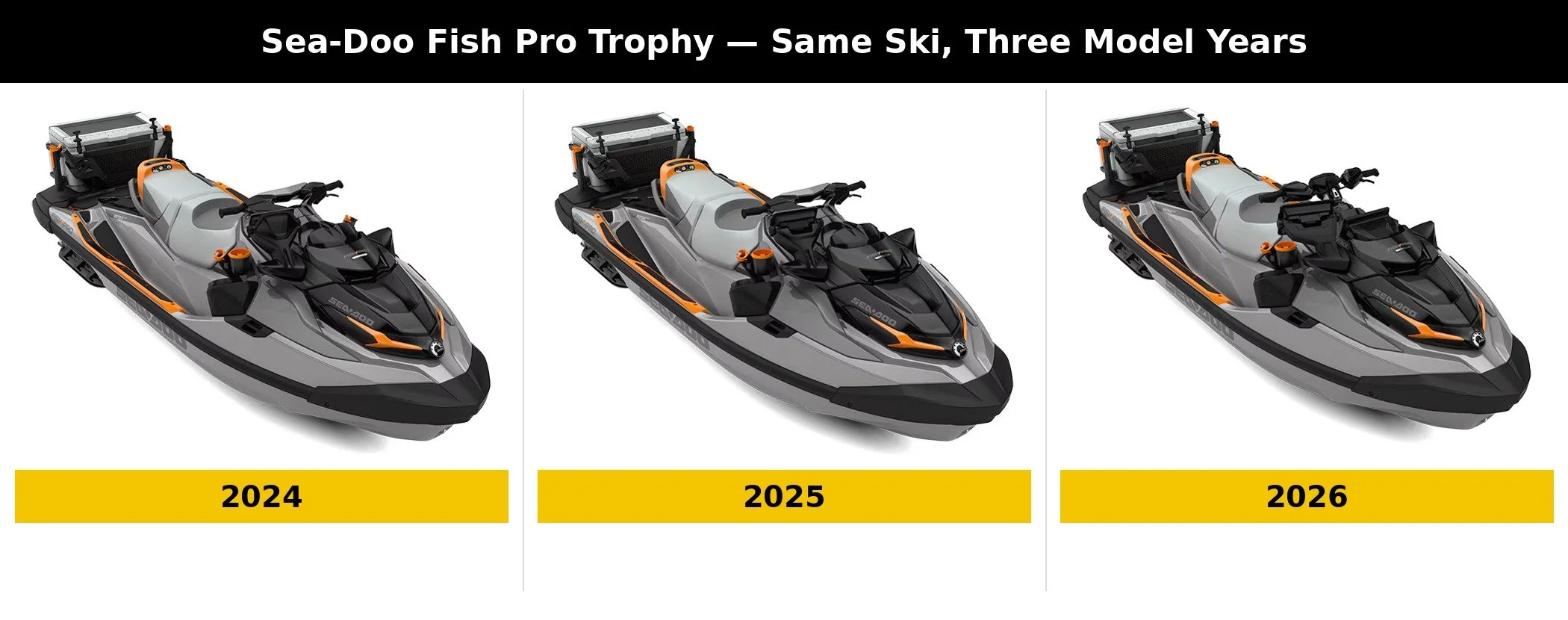
Sea-Doo can — and does — change things internally from one year to the next without touching the exterior at all. Take the Fish Pro Trophy 2022–2026 models: all five years look near enough identical, bar a minor graphics change, and in a lot of respects they are the same ski. But order a replacement iBR module, fuel pump, or main wiring harness for a 2023 model when you’ve actually got a 2024, and you’ll end up with the wrong part — and further delays to your repair while it gets sorted. Nothing about looking at the ski from across the workshop would tell you that.
The Two Things That Actually Identify Your Sea-Doo
1. The Model Name
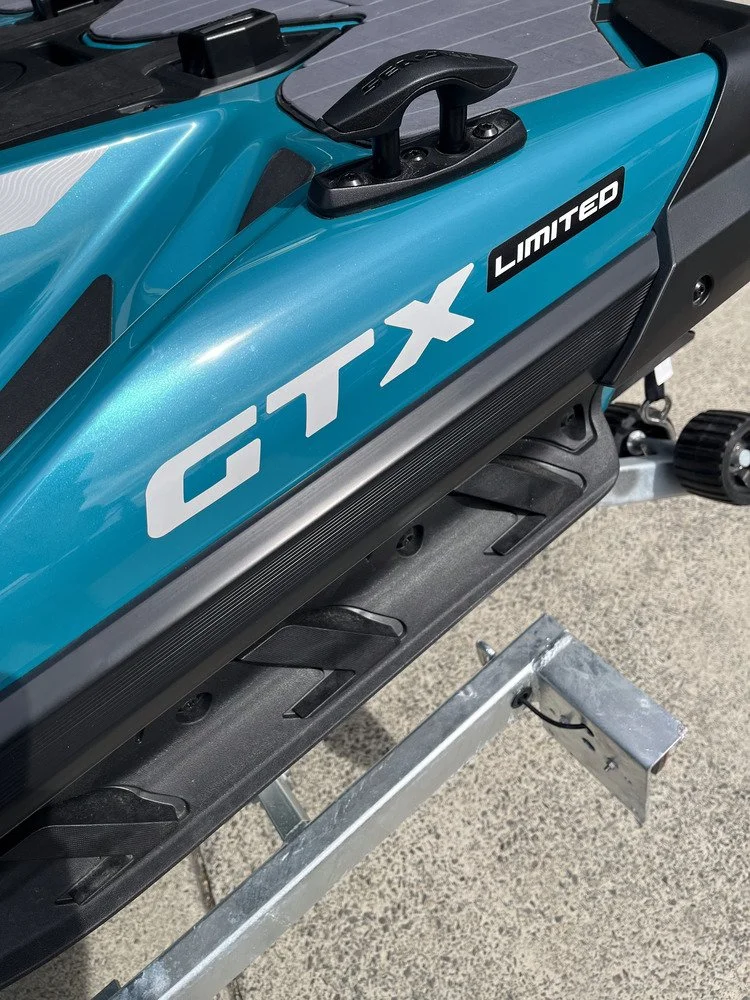
Sea-Doo’s model range varies by hull shape, engine, colourway and standard accessories within a given year. Each specific model has its own name, and it’s usually printed right there on the OEM graphics on the outside of the hull — easy to find, easy to read.
2. The Year — via the HIN
New model years typically go on sale late in the previous calendar year — 2027 models showing up for sale in late 2026, for instance — but they’re still badged and sold as 2027 models. Going by when you bought it, or even the model year printed on a sticker, isn’t reliable enough on its own.
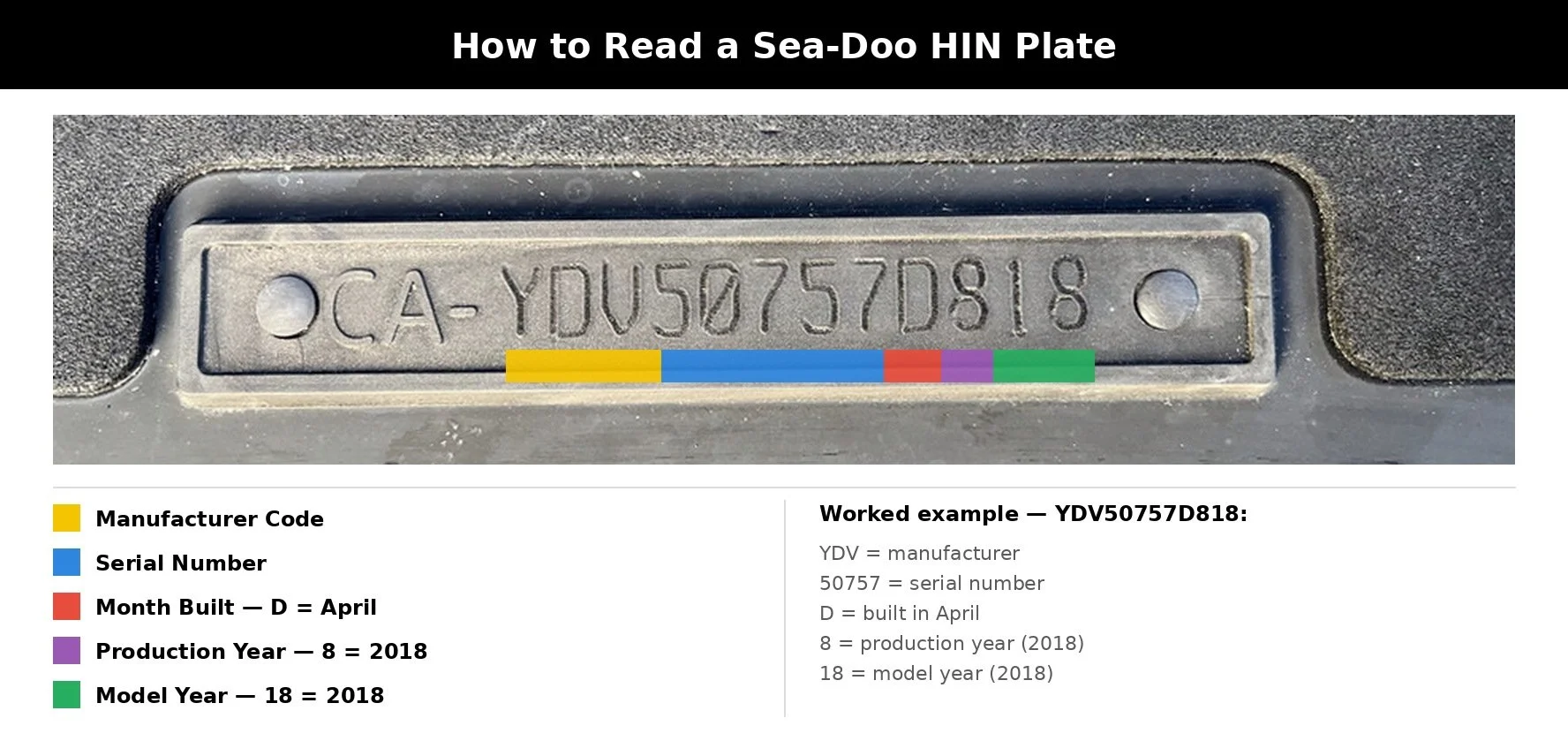
The one number that settles it is the HIN — Hull Identification Number — stamped into a plate fixed to the outside of the hull at the rear of the ski, above the front of the sponson on the right-hand side. It’s 12 digits, and it’s worth knowing what each part actually tells you rather than just the last two digits:
Manufacturer code — identifies the builder (BRP/Sea-Doo)
Serial number — the individual unit’s serial (a letter can substitute for a digit)
Month of production — which month that specific hull was built
Year of production — the calendar year it was actually built, which isn’t always the same as the model year
Model year — the last two digits, and the one most owners rely on
Here’s a real one to walk through: YDV50757D818 (some plates carry a country/import code (CA) ahead of this, which isn’t part of the core 12-digit HIN itself). YDV is the manufacturer code, 50757 is that individual hull’s serial number, D means it was built in April, the 8 after that is the production year (2018), and the final 18 is the model year (2018). On this one, production year and model year land on the same year — but that’s not guaranteed, which is exactly why it’s worth reading past just the last two digits.
Same Model Year, Different Parts
Here’s the detail that catches even careful owners out: the model year on the HIN plate isn’t a guarantee that two skis need identical parts. Sea-Doo, like most manufacturers, makes running changes partway through a production year — a component gets updated or resourced mid-run, without the model year changing at all. Two skis with the exact same model year stamped on the plate can still need different part numbers, depending on when in that production run each one was actually built.
This is exactly why the month and year-of-production digits on the HIN matter, not just the model year. If a part doesn’t seem to match despite the model year lining up, that’s usually why — and it’s also why a parts counter or dealer will often ask for the full HIN rather than just the model year when they’re looking something up. Worth doing the same yourself: have the complete HIN on hand, not just the last two digits, whenever you’re ordering something you’re not 100% sure about.
If the Decals Are Gone
If your ski’s been stripped of its factory decals and you can’t confirm the model that way, the HIN still gives you the year and the hull will tell an experienced eye the rest. From there, a clear photo of the ski and engine bay sent to a workshop that knows Sea-Doos, or posted in a Sea-Doo-specific owners’ group, will usually get you a fast, accurate answer — worth double-checking online yourself regardless. Feel free to send us a photo directly if you’re stuck: info@projetski.com.au.
Going Further
Knowing exactly what you own is step one. Knowing how to check it over properly before you buy — or keep it running right afterward — is step two, and that’s covered in full in the Used Sea-Doo Buyer’s Course (coming soon).
If you’ve bought a used Sea-Doo and something’s not adding up electrically, the Fault Codes and DESS Key guides below are the next places to look.